


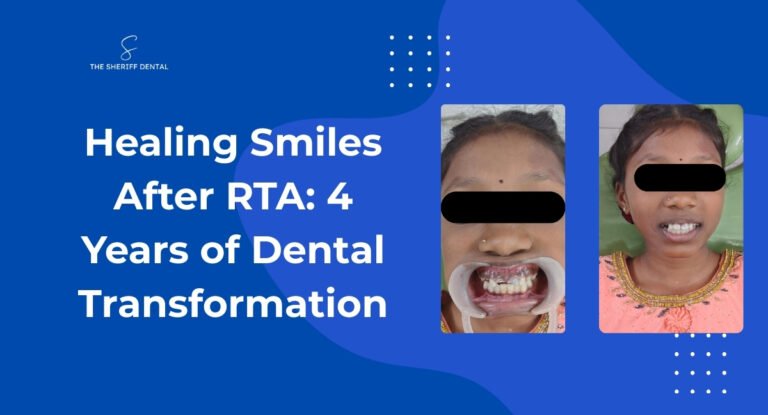
A young female patient reported with fractured and discolored upper central incisors following a road traffic accident. The injury not only compromised the health and structure of the teeth but also created esthetic concerns that deeply affected her confidence. Radiographic findings revealed pathology that required careful and staged management.
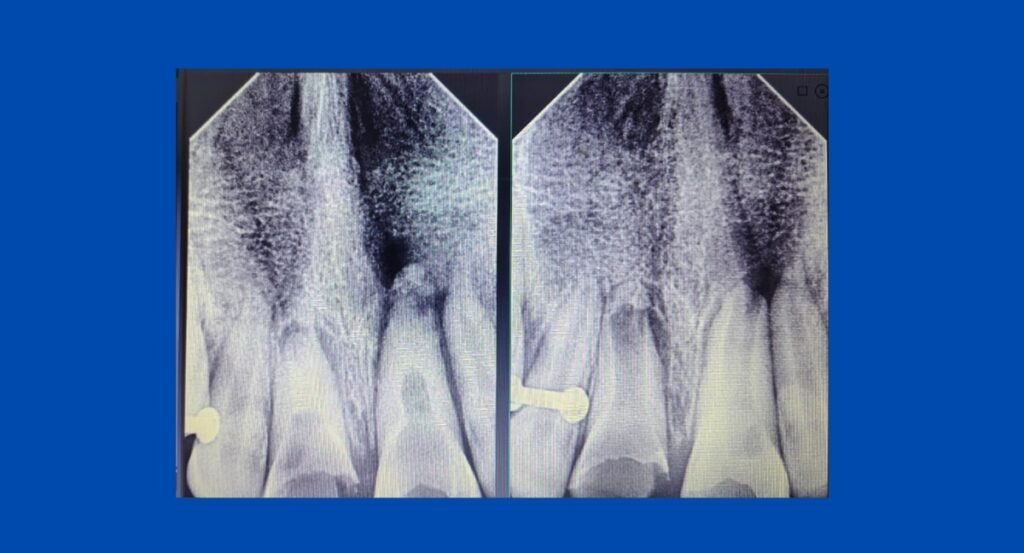
The child was treated over multiple sittings with a planned, long-term approach. The therapy was finalized with an MTA apexification procedure to achieve proper apical closure. Following this, a fiber post and core build-up was done to provide strength and reinforcement to the compromised incisors. Instead of going for a permanent crown at this stage, the teeth were restored with composite build-up and veneering, ensuring a natural esthetic outcome while preserving maximum tooth structure.
Over a span of four years, the patient was kept under close observation with regular follow-ups. Each stage of the treatment was carefully monitored, allowing healing to progress while maintaining both esthetics and function.
The treatment resulted in well-stabilized upper central incisors with excellent esthetic rehabilitation through composite veneering. The patient regained not only her dental health but also her confidence, reflected in her bright smile.
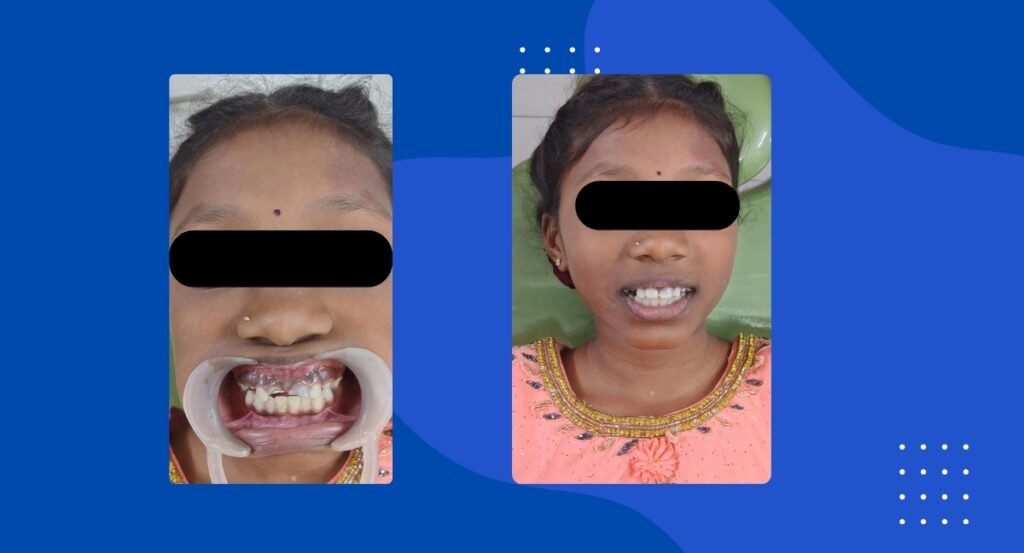
This case demonstrates the importance of phased treatment, modern biomaterials like MTA, and minimally invasive esthetic rehabilitation in successfully managing traumatic injuries to young permanent teeth.


© Copyrights 2026 Sheriff Dental


